
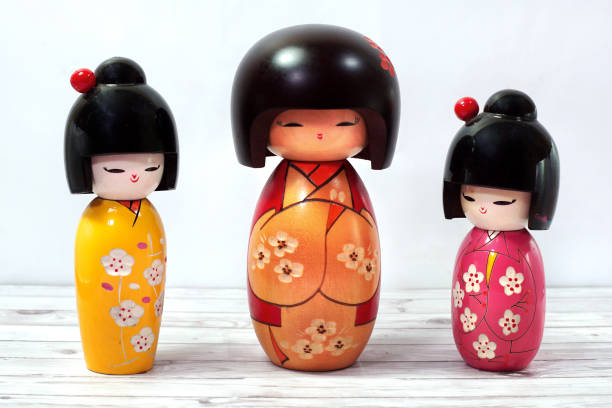
The Pulse of the Inanimate: A Deep-Dive into the Transcendental World of Japanese Doll Artistry
In the global lexicon of toys, a doll is frequently reduced to a disposable commodity—a transient relic of childhood. Yet, to step onto the soil of Japan is to witness a radical departure from this utilitarian view. In the Land of the Rising Sun, the Ningyo (human shape) occupies a liminal space between the mundane and the divine. For over a thousand years, these figures have functioned as spiritual lightning rods, artistic benchmarks, and emotional confidants.
To truly comprehend the gravity of Japanese doll culture, one must peel back layers of silk, lacquer, and oyster-shell paste to find a philosophy that defies the Western “uncanny valley.” This is a world where objects breathe, where wood possesses a heartbeat, and where a doll is never merely a “thing.”
I. The Primordial Vessel: Dolls as Spiritual Technology
The lineage of the Japanese doll does not begin in a workshop, but in the fires of ritual. Long before they were aesthetic marvels, dolls were “spiritual technology” designed to navigate the complexities of fate.
- The Scapegoat Tradition: During the Nara and Heian periods, paper and straw figures known as Katashiro were used as metaphysical sponges. Practitioners would rub these figures against their skin to absorb bad luck, sickness, or “kegare” (spiritual impurity). These figures were then cast into rivers—a practice that survives today in the Nagashi-bina ceremonies, where paper dolls carry the year’s misfortunes out to sea.
- The Guardian Clay: Going back even further to the Jomon era, the Dogu figures—haunting, wide-eyed clay sculptures—are believed to have been shattered and buried to heal physical ailments. This established a core tenet of the Japanese psyche: a human-shaped object is a container for the soul.
II. The Architecture of Elegance: The Hina-Matsuri and Beyond
As the Japanese courtly life flourished in Kyoto, dolls became the ultimate expression of Miyabi (courtly elegance). The evolution of the Hina-Matsuri, or the Doll Festival, transformed the doll into an heirloom of immense cultural value.
The Alchemy of Gofun and Silk
The creation of a traditional Japanese doll is an exercise in painstaking patience. A master artisan doesn’t just paint a face; they grow it.
- The Skin: Using Gofun, a mixture of pulverized oyster shells and animal glue, the craftsman applies dozens of layers to a carved wooden head. Each layer is sanded and polished until the surface reaches a milky, ethereal translucence that seems to react to the warmth of the room.
- The Attire: For the Emperor and Empress dolls, the clothing is a historical archive. Artisans use Nishijin-ori—a gold-threaded silk brocade—to replicate the complex, twelve-layer robes (Junihitoe) of the imperial court. Every fold and stitch is a testament to a craft that takes decades to master.
III. Regional Souls: From Mountain Wood to Clay Souls
Japan’s geography is mirrored in its dolls. Each prefecture has birthed a distinct “species” of Ningyo that reflects local materials and folk wisdom.
VarietyMaterialityThe PhilosophyKokeshiDogwood/MapleBorn in the Tohoku hot springs; it celebrates the beauty of subtraction and the raw spirit of the forest.HakataUnfired ClayHailing from Fukuoka; these dolls capture a single moment of human motion with a haunting, matte realism.KimekomiPaulownia WoodA technique where silk fabric is tucked into grooves; it represents the “hidden” beauty of the Edo period.GoshoShell PasteLarge-headed baby dolls from Kyoto; they are “ambassadors of health” and pure, childlike joy.
These regional dolls are not static relics. They are part of a living economy of craftsmanship that sustains rural communities and keeps ancient aesthetic values relevant in a digital age.
IV. The Mechanical Ghost: Karakuri and the Ancestry of AI
Perhaps the most fascinating chapter in this odyssey is the Karakuri Ningyo. During the Edo period, Japanese engineers created sophisticated clockwork puppets that could perform tea ceremonies, fire arrows, or write calligraphy.
Unlike European automatons of the 18th century, which often flaunted their mechanical complexity, Karakuri were designed to evoke Empathy. The gears were hidden deep within silk robes so that the observer would focus on the “politeness” of the doll’s bow or the “concentration” in its eyes. This cultural comfort with “lifelike machines” is the direct reason why Japan is the world leader in humanoid robotics today. In the Japanese mind, a robot is simply a doll with a more complex set of internal gears.
V. The Contemporary Renaissance: Resin, Fashion, and Identity
In the late 20th century, a new wave of doll culture emerged from the Otaku and Harajuku scenes, proving that the obsession with “human shapes” is as potent as ever.
The Super Dollfie and Ball-Jointed Dolls (BJD)
In 1999, the Kyoto-based company Volks introduced the Super Dollfie, sparking a global revolution. These are not toys for children but “high-fashion avatars” for adults.
- Customization as Art: Owners spend hundreds of hours on “face-ups,” painting microscopic eyelashes and subtle blushing to give their dolls a specific personality.
- The “Owner” Identity: In Japan, you do not “buy” a high-end BJD; you “welcome” it home. This community uses dolls to express their own aesthetic desires, often traveling with their dolls to scenic locations for photography, effectively treating the doll as a muse and a companion.
VI. The Final Act: The Ethics of Gratitude and Ningyo Kuyo
The most profound distinction between Japanese and Western doll culture lies in how an object’s life ends. In Japan, a doll that has been loved for years is believed to have acquired a “soul.” To discard such an object in the trash is seen as an act of spiritual negligence.
This gives rise to Ningyo Kuyo (Doll Funerals). At temples like Awashima Jinja or Meiji Jingu, thousands of dolls are brought by their owners for a final goodbye.
- The Ritual: Priests chant sutras to “release” the spirits from the figures.
- The Meaning: It is a ceremony of Kansha (gratitude). It teaches the owner to honor the time spent with the object and to recognize the craftsmanship behind it. In an age of fast fashion and disposable tech, Ningyo Kuyo stands as a radical act of mindfulness and environmental respect.
VII. Conclusion: The Mirror of Humanity
The Japanese doll is a paradox: it is an object that moves the heart precisely because it remains still. Whether it is a thousand-year-old clay figure or a modern resin fashion icon, the Ningyo serves as a mirror. When we look into the glass eyes of a Japanese doll, we are not looking at a toy; we are looking at the history of Japanese fashion, the heights of their engineering, and the depth of their spiritual empathy.
Japan has mastered the art of the “Inanimate Pulse.” They have proven that with enough silk, lacquer, and love, we can create something that—while not alive in the biological sense—is undeniably possessed of a spirit.
Ready to Step into the Still Kingdom?
The world of Japanese dolls is a labyrinth of beauty that offers endless discovery for the curious traveler or art enthusiast.
