
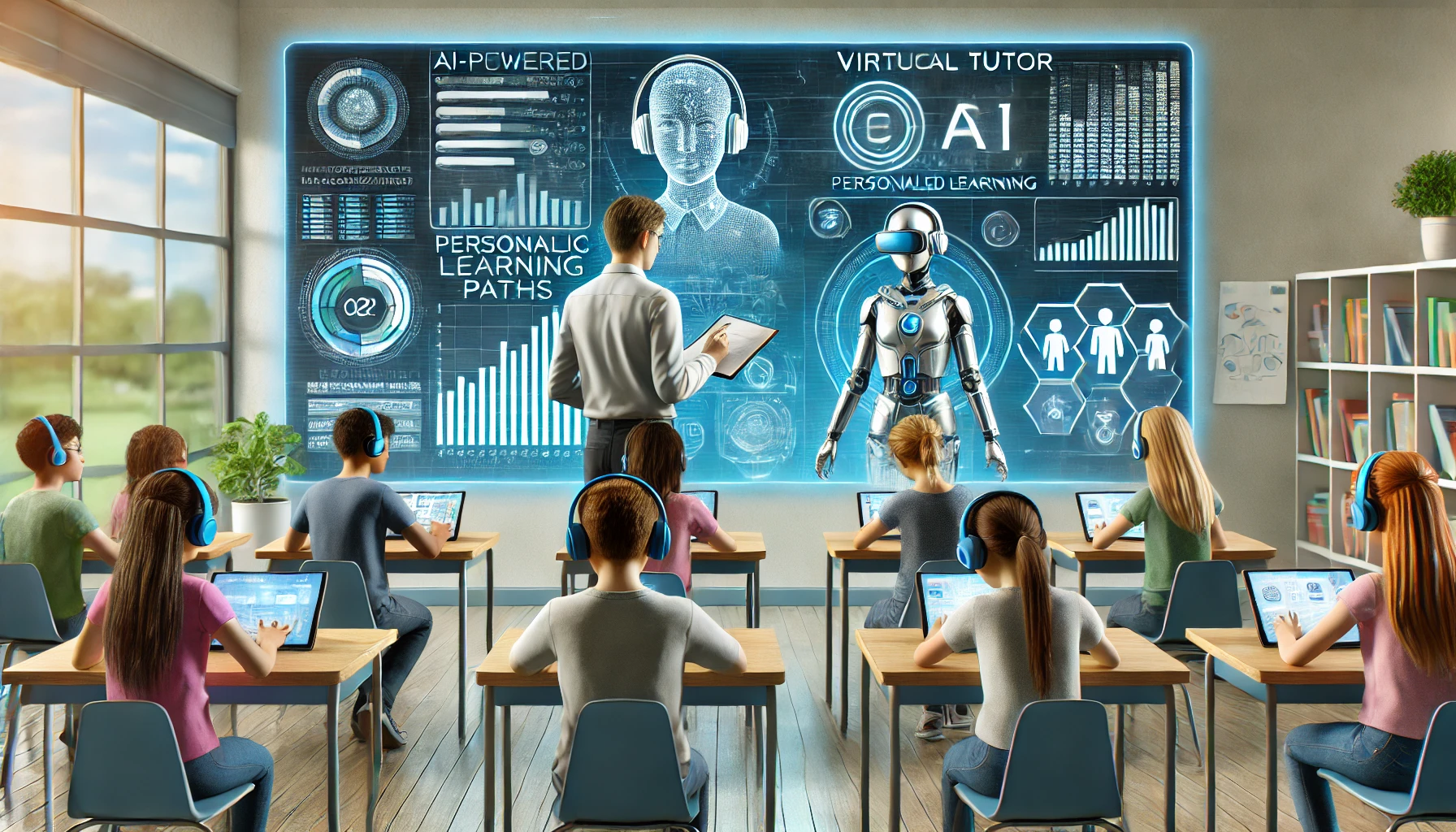
Artificial Intelligence Transforms Education
Artificial intelligence (AI) is rapidly changing all industries, and education is no different. This technology is revolutionizing the way students learn, teachers teach, and educational institutions operate. With its ability to analyze data, adapt to individual needs, and provide instant feedback, AI has opened new doors for making education more personalized, efficient, and accessible.
1. What is Artificial Intelligence in Education?
AI in education refers to the use of intelligent systems, algorithms, and tools to improve learning processes and outcomes. From adaptive learning platforms to virtual tutors, AI is making it possible to tailor education to individual needs. It also helps in automating administrative tasks, allowing teachers to focus more on teaching and less on paperwork.
2. Personalized Learning for Every Student
One of the biggest advantages of AI in education is personalized learning. Every student has a unique learning pace and style, and AI tools can adapt to these differences. For example, platforms like Khan Academy use AI to provide customized lessons based on a student’s progress.
AI-powered systems can analyze how well a student understands a concept and adjust the difficulty of questions or recommend additional resources. This ensures that no student is left behind, and everyone can learn at their own speed.
3. Virtual Tutors and Chatbots
Virtual tutors and AI chatbots are changing the way students get help. These tools are available 24/7 to answer questions, explain concepts, or provide practice exercises. For example, tools like Duolingo use AI to help students learn new languages through interactive lessons.
Students who feel shy about asking questions in class can use these virtual tutors to clear their doubts. This boosts confidence and encourages continuous learning.
4. Automating Administrative Tasks
AI is not only helping students but also reducing the workload for teachers and school administrators. Tasks like grading assignments, scheduling classes, and managing student records can now be automated using AI tools.
For example, tools like Gradescope allow teachers to grade essays and tests faster by analyzing patterns in student responses. This automation saves time and lets teachers focus on more meaningful tasks like lesson planning and engaging with students.
5. Making Education Accessible to All
AI has the potential to make education more inclusive. It can provide learning opportunities to students with disabilities by offering tools like speech-to-text software, visual aids, and sign language translation. AI also makes it easier for students in remote areas to access quality education through online platforms.
For instance, Coursera and EdX offer AI-driven courses that are accessible to anyone with an internet connection, breaking barriers of location and resources.
6. Challenges and Ethical Concerns
While AI has many benefits, it also raises some concerns. One major issue is data privacy. AI systems collect large amounts of data about students to provide personalized experiences, and this data must be handled securely.
Another challenge is ensuring that AI tools are fair and unbiased. If AI systems are not properly designed, they may favor certain groups over others. Educators and developers must work together to address these issues and make AI tools reliable and ethical.
7. The Future of AI in Education
The future of AI in education looks promising. Technologies like augmented reality (AR) and virtual reality (VR) combined with AI will create immersive learning experiences. For example, students could use VR headsets to explore historical landmarks or conduct science experiments in a virtual lab.
Moreover, AI could help predict future trends in education, enabling institutions to adapt quickly to changing needs. It will also play a significant role in lifelong learning, helping adults update their skills in a rapidly evolving job market.
FAQs on How AI Transforms Education
1. What is AI in education?
AI in education uses intelligent systems and algorithms to enhance learning, personalize experiences, and automate administrative tasks like grading or scheduling.
2. How does AI help in personalized learning?
AI adapts lessons to individual students’ learning paces and styles, offering tailored content, exercises, and resources based on their progress.
3. What are virtual tutors, and how do they work?
Virtual tutors are AI-powered tools available 24/7 to answer questions, explain concepts, and provide exercises, helping students learn anytime, anywhere.
4. Can AI make education more accessible?
Yes, AI tools like speech-to-text software and online platforms make education accessible to students with disabilities or those in remote areas.
5. What are the challenges of using AI in education?
The main challenges include ensuring data privacy, preventing bias in AI systems, and addressing ethical concerns to create fair and secure tools.
Conclusion
AI is transforming education in unprecedented ways. By providing personalized learning, automating tasks, and making education more accessible, it has the potential to create a more effective and inclusive learning environment. However, challenges like data privacy and ethical concerns must be addressed to fully harness its benefits.
